Showing posts with label Hollywood Went to War. Show all posts

Thursday, October 6, 2022

Hollywood Went to War

Sixty-seventh * in our series, Hollywood Went to War, is Richard Boone.
In 1941 Boone joined the United States Navy and served on three ships in the Pacific during World War II, seeing combat as an aviation ordnanceman, aircrewman and tail gunner on Grumman TBF Avenger torpedo bombers and ended his service with the rank of petty officer first class
Mr. Boone, thank you for your service to our country! May you rest in peace!

*Sixty seven posts, eighty-five individuals.

Thursday, July 14, 2022

Hollywood Went to War

Sixty-sixth * in our series, Hollywood Went to War, is Larry Storch.
Storch served on the submarine tender Proteus during the war along with a radio operator named Bernie Schwartz, according to his Facebook page. They were on the Proteus in Tokyo Bay Sept. 2, 1945, and witnessed Japan’s formal surrender onboard the nearby battleship Missouri.

Schwartz later changed his name to "Tony Curtis". Larry recently passed away at the age of 99.
Larry, thank you for your service to our country! Rest in peace!

*Sixty six posts, eighty-four individuals.

Wednesday, January 19, 2022

Hollywood Went to War

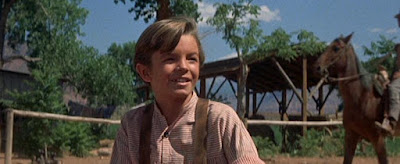
Sixty-fifth * in our series, Hollywood Went to War, is child star Roger Mobley.
In 1968, Mobley was drafted into the United States Army. After boot camp at Fort Ord, California, Mobley requested his term of service be extended to qualify for training in Special Forces. He completed parachute jump training at Fort Benning, Georgia, after having volunteered for the Special Forces training at the John F. Kennedy Center for Special Warfare at Fort Bragg, North Carolina. On completion of his training, Mobley was assigned to the 46th Special Forces Company (Airborne), 1st Special Forces Group. He returned to the United States in November 1970.
Mr. Mobley, thank you for your service to our country!

*Sixty five posts, eighty-three individuals.

Wednesday, January 12, 2022

Hollywood Went to War

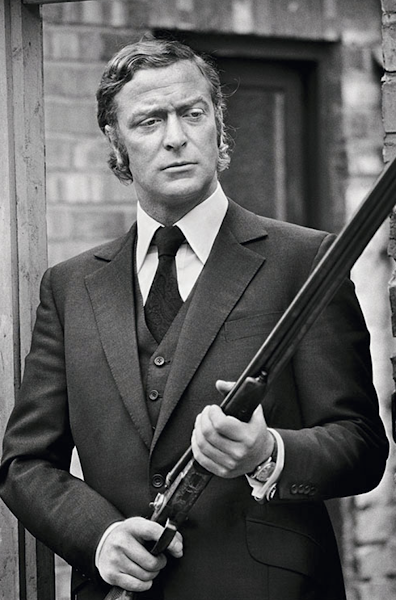
Sixty-fourth* in our series Hollywood Went to War, is Michael Caine.


Between 1952 and 1954, Caine was called up to do his national service, and served in the British Army's Royal Fusiliers, first at the British Army of the Rhine Headquarters in Iserlohn, West Germany, and then on active service during the Korean War. 
He had gone into Korea feeling sympathetic to communism, coming as he did from a poor family, but the experience left him permanently repelled due to the human-wave attacks practised by North Korea and China, which left him with the sense that their governments did not care about their citizens. 
Caine experienced a situation where he thought he was going to die, the memory of which stayed with him and formed his character. In his 2010 autobiography The Elephant to Hollywood, he wrote that "The rest of my life I have lived every bloody moment from the moment I wake up until the time I go to sleep." 
Caine has said that he would like to see the return of national service in Britain, to help combat youth violence, stating: "I'm just saying, put them in the Army for six months. You're there to learn how to defend your country. You belong to the country. Then, when you come out, you have a sense of belonging, rather than a sense of violence."
Mr. Caine, thank you for the service to your country!

*Sixty four posts, eighty-two individuals.

Wednesday, January 5, 2022

Hollywood Went to War

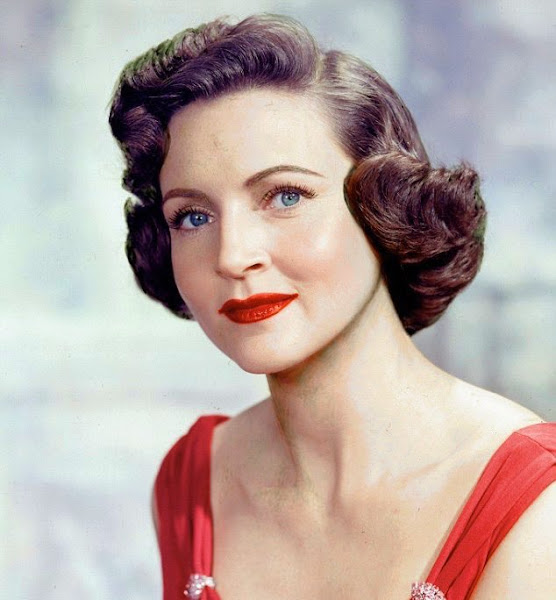
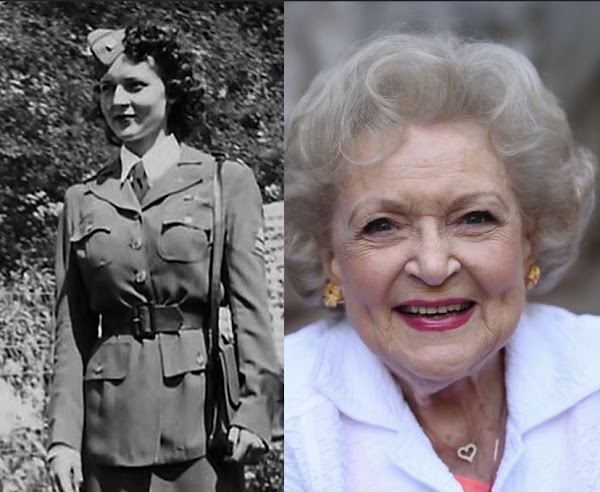
Sixty third in our series Hollywood Went to War, is the recently passed Betty White.
"When World War II broke out, she put her career on hold and volunteered for the American Women's Voluntary Services (AWVS). Her assignment included the transportation of military supplies through California. She also participated in events for troops before they were deployed overseas." 

 Ms. White: we thank you for your service to your country. Rest in peace. 


 *Sixty three posts, eighty-two individuals.

Thursday, May 13, 2021

Hollywood Went to War


Sixty-second* in our series Hollywood Went to War, are Terry Wilson, actor, stuntman, Marine vet, who played Ward Bond's right hand man on Wagon Train all those years ago, and Frank McGrath, actor stuntman and Navy vet, who played Wagon Train's irascible cook, Charlie Wooster .
 Like many men of their era, you don't find much mention of their service. They went, they did their duty, they heard the shots fired in anger, and then they came back and life went on!

Here is the totality of what I could find of Terry Wilson's service to our country: 
Terry enlisted and served in the Marine Corps from 1943 to 1946

 For Frank, it was even shorter. Just a mention in passing that he was a Navy vet.

Gentlemen, we thank you for your service to your country. Rest in peace. 

 *Sixty two posts, eighty-one individuals.

Thursday, May 6, 2021

Hollywood Went to War


Sixty-first* in our series Hollywood Went to War, was a fellow who didn't actually go. It's not like he didn't want to, but Ward Bond was an epileptic, and was rejected by his draft board for active duty during World War II.
But don't count Ward Bond out of the fight or think that he didn't do his part in some way during World War II. You see besides making great movies to keep the morale of our troops high, he along with another actor by the name of Ronald Reagan, made training and morale films for the troops, and there is something else -- because Ward Bond couldn’t serve on active duty in the military during the war, he became an Air Raid Warden and was known to pull duty every chance he had, subsequently putting in many long days.
It's interesting to note that because of his efforts during the war, he was given full military honors with an honor guard and flag-draped coffin during his funeral.

Sir, we thank you for your service to your country. Rest in peace.


*Sixty one posts, eighty individuals.

Wednesday, September 23, 2020

Hollywood Went to War

Sixtieth* in our series Hollywood Went to War, if not Hollywood, then Hollywood adjacent, Marcel Marceau served during WWII.


...served "as a member of the French Resistance during World War II. Along with his brother Alain, Marceau forged documents and doctored identity cards to help prevent French children from being conscripted into German labor camps. He also smuggled some 70 Jewish children out of the country by posing as a Boy Scout leader and leading them through the wilderness to safety in neutral Switzerland. The silent performer later joined the Free French Forces under Charles De Gaulle, and served as a liaison offer to General George Patton’s army while entertaining Allied troops with his miming."

Sir, we thank you for your service to your country. Rest in peace.


*Sixty posts, seventy nine individuals.

Wednesday, August 21, 2019

Hollywood Went to War

Fifty-ninth* in our series Hollywood Went to War, was a familiar face on TV from 1959–1972, and a Korean War veteran: Dan Blocker!


As a boy, he attended Texas Military Institute...Blocker was drafted into the United States Army during the Korean War. He had basic training at Fort Polk, Louisiana, and served as an infantry sergeant in F Company, 2nd Battalion, 179th Infantry Regiment, 45th Infantry Division in Korea, from December 1951 to August 1952. He received a Purple Heart for wounds in combat.

In addition to the Purple Heart, Blocker received the National Defense Service Medal, Korean Service Medal with two bronze campaign stars, Republic of Korea Presidential Unit Citation, United Nations Service Medal, Korean War Service Medal, and Combat Infantryman Badge.

Sir, we thank you for your service to our country. Rest in peace.


*Fifty nine posts, seventy eight individuals.

Monday, November 12, 2018

Hollywood Went to War


Fifty-eighth* in our series Hollywood Went to War, are a couple of gentlemen who are Hollywood adjacent, the primary creators of the Marvel Universe: Jack Kirby and Stan Lee. Stan did appear in quite a few cameos throughout the history of Marvel related films.

(Jack) Kirby was drafted into the U.S. Army on June 7, 1943. After basic training at Camp Stewart, near Savannah, Georgia, he was assigned to Company F of the 11th Infantry Regiment. He landed on Omaha Beach in Normandy on August 23, 1944, two-and-a-half months after D-Day, although Kirby's reminiscences would place his arrival just 10 days after. Kirby recalled that a lieutenant, learning that comics artist Kirby was in his command, made him a scout who would advance into towns and draw reconnaissance maps and pictures, an extremely dangerous duty.

Stanley Martin Lieber (Lee) entered the United States Army in early 1942 and served within the US as a member of the Signal Corps, repairing telegraph poles and other communications equipment. He was later transferred to the Training Film Division, where he worked writing manuals, training films, slogans, and occasionally cartooning. His military classification, he says, was "playwright"; he adds that only nine men in the U.S. Army were given that title. Vincent Fago, editor of Timely's "animation comics" section, which put out humor and funny animal comics, filled in until Lee returned from his World War II military service in 1945.

Gentlemen, we thank you for your service to our country. Rest in peace.


*Fifty eight posts, seventy seven individuals.

Tuesday, September 19, 2017

Hollywood Went to War

Fifty-seventh* in our series Hollywood Went to War, are a couple of gentlemen who both guest starred at one time or another on Star Trek, TOS:
William Windom and James Gregory!


William Windom served in the United States Army in the European Theater of Operations in World War II, as a paratrooper with Company B, 1st Battalion 508th Parachute Infantry Regiment, 82nd Airborne Division.

James Gregory served three years in the United States Navy and United States Marine Corps during World War II.

Gentlemen, we thank you for your service to our country. Rest in peace.


*Fifty seven posts, seventy five individuals.

Sunday, April 30, 2017

Hollywood Went to War

Fifty-sixth* in our series Hollywood Went to War is Mr. Wizard himself, Don Herbert!


His career as an actor was interrupted by World War II when he enlisted in the United States Army as a Private. Herbert later joined the United States Army Air Forces, took pilot training, and became a B-24 bomber pilot who flew 56 combat missions from Italy with the 767th Bomb Squadron, 461st Bomb Group of the Fifteenth Air Force.

When Herbert was discharged in 1945 he was a Captain and had earned the Distinguished Flying Cross and the Air Medal with three oak leaf clusters.

Captain Herbert, we thank you for your service to our country. Rest in peace.


*56th post, 73 individuals

Wednesday, September 7, 2016

Hollywood Went to War

Fifty-fifth in our series Hollywood Went to War is Wyatt Earp himself, Hugh O'Brian.


O'Brian was born Hugh Charles Krampe in Rochester, New York, son of Hugh John Krampe, a United States Marine Corps officer, and Edith Lillian (Marks) Krampe. His paternal grandparents were German immigrants; his mother was half German-Jewish and half English and Scots ancestry. O'Brian first attended school at New Trier High School in Winnetka, Illinois, then the (now defunct) Kemper Military School in Booneville, Missouri. He lettered in football, basketball, wrestling, and track. O'Brian dropped out of the University of Cincinnati after one semester to enlist in the United States Marine Corps during World War II. At seventeen, he became the youngest Marine drill instructor

As a lad, I remember sending away for and building a full scale plastic model of Wyatt Earp's long barreled Buntline Special. O'Brian helped create the Golden Age of TV Westerns.


Mr. O'Brian, we thank you for your service to our country. Rest in peace.


Hugh O’Brian passes

Monday, May 23, 2016

Hollywood Went to War

Fifty-fourth in our series Hollywood Went to War, is an actress whose notable career was put on hold to answer the call to service to our country: Ida Lupino.


According to her obit in the NYT, "Ida Lupino was born in London on Feb. 4, 1918, during a German zeppelin bombing."

Movie actress Ida Lupino, is a lieutenant in the Women's Ambulance and Defense Corps and is shown at a telephone switch board in Brentwood, California, on January 3, 1942. In an emergency she can reach every ambulance post in the city. It is in her house and from here she can see the whole Los Angeles area.

Lt. Lupino, we thank you for your service to our country. Rest in peace.

Monday, April 25, 2016

Hollywood Went to War

Fifty third, and perhaps last in our series Hollywood Went to War, is America's most decorated World War II soldier, Audie Murphy.

Image and video hosting by TinyPic


Murphy's older sister helped him to falsify documentation about his birth date to meet the minimum-age requirement for enlisting in the military, and after being turned down by the Navy and the Marine Corps he enlisted in the Army. He first saw action in the Allied invasion of Sicily and the Battle of Anzio, and in 1944 was part of the liberation of Rome and invasion of southern France. Murphy fought at Montélimar, and led his men on a successful assault at the L'Omet quarry near Cleurie in northeastern France in October.

...Murphy received the Distinguished Service Cross for action taken on 15 August 1944, during the first wave of the Allied invasion of southern France. After landing on Yellow Beach near Ramatuelle, Murphy's platoon was attacked by German soldiers while making their way through a vineyard. He retrieved a machine gun that had been detached from the squad and returned fire at the German soldiers, killing two and wounding one. Two Germans exited a house about 100 yards (91 m) away and appeared to surrender; Murphy's best friend responded to them, and they shot and killed him. Murphy advanced alone on the house under direct fire. He wounded two, killed six, and took eleven prisoner.

Murphy was with the 1st Battalion, 15th Infantry Regiment during the 27–28 August offensive at Montélimar that secured the area from the Germans. Along with the other soldiers who took part in the action, he received the Presidential Unit Citation.

Murphy's first Purple Heart was for a heel wound received in a mortar shell blast on 15 September 1944 in northeastern France. His first Silver Star came after he killed four and wounded three at a German machine gun position on 2 October at L'Omet quarry in the Cleurie river valley. Three days later, Murphy crawled alone towards the Germans at L'Omet, carrying an SCR-536 radio and directing his men for an hour while the Germans fired directly at him. When his men finally took the hill, 15 Germans had been killed and 35 wounded. Murphy's actions earned him a Bronze Oak Leaf Cluster for his Silver Star. He was awarded a battlefield commission to second lieutenant on 14 October, which elevated him to platoon leader. While en route to Brouvelieures on 26 October, the 3rd Platoon of Company B was attacked by a German sniper group. Murphy captured two before being shot in the hip by a sniper; he returned fire and shot the sniper between the eyes. At the 3rd General Hospital at Aix-en-Provence, the removal of gangrene from the wound caused partial loss of his hip muscle and kept him out of combat until January. Murphy received his first Bronze Oak Leaf Cluster for his Purple Heart for this injury.

The Colmar Pocket, 850 square miles (2,200 km2) in the Vosges Mountains, had been held by German troops since November 1944. On 14 January 1945, Murphy rejoined his platoon, which had been moved to the Colmar area in December. He moved with the 3rd Division on 24 January to the town of Holtzwihr, where they met with a strong German counterattack. He was wounded in both legs, for which he received a second Bronze Oak Leaf Cluster for his Purple Heart. As the company awaited reinforcements on 26 January, he was made commander of Company B.

The Germans scored a direct hit on an M10 tank destroyer, setting it alight, forcing the crew to abandon it. Murphy ordered his men to retreat to positions in the woods, remaining alone at his post shooting his M1 carbine and directing artillery fire via his field telephone while the Germans aimed fire directly at his position. Murphy mounted the abandoned, burning tank destroyer and began firing its .50 caliber machine gun at the advancing Germans, killing a squad crawling through a ditch towards him. For an hour, Murphy stood on the tank destroyer returning German fire from foot soldiers and advancing tanks, killing or wounding 50 Germans. He sustained a leg wound during his stand, and stopped only after he ran out of ammunition. Murphy rejoined his men, disregarding his own wound, and led them back to repel the Germans. He insisted on remaining with his men while his wounds were treated. For his actions that day he was awarded the Medal of Honor. The 3rd Infantry Division was awarded the Presidential Unit Citation for its actions at the Colmar Pocket, giving Murphy a Bronze Oak Leaf Cluster for the emblem.

On 16 February, Murphy was promoted to first lieutenant and was awarded the Legion of Merit for his service 22 January 1944 – 18 February 1945. He was moved from the front lines to Regimental Headquarters and made a liaison officer.

The United States additionally honored Murphy's war contributions with the American Campaign Medal, the European–African–Middle Eastern Campaign Medal with arrowhead device and campaign stars, the World War II Victory Medal, and the Army of Occupation Medal with Germany Clasp. France recognized his service with the French Legion of Honor – Grade of Chevalier, the French Croix de guerre with Silver Star, the French Croix de guerre with Palm, the French Liberation Medal and the French Fourragère in Colors of the Croix de guerre, which was authorized for all members of the 3rd Infantry Division who fought in France during World War II. Belgium awarded Murphy the Belgian Croix de guerre with 1940 Palm.

Brigadier General Ralph B. Lovett and Lieutenant Colonel Hallet D. Edson recommended Murphy for the Medal of Honor. Near Salzburg, Austria on 2 June 1945, Lieutenant General A.M. Patch presented Murphy with the Medal of Honor and Legion of Merit for his actions at Holtzwihr. When asked after the war why he had seized the machine gun and taken on an entire company of German infantry, he replied, "They were killing my friends." Murphy received every U.S. military combat award for valor available from the U.S. Army for his World War II service.


Major Murphy, we thank you for your extraordinary service to our country. Rest in peace.

Monday, April 18, 2016

Hollywood Went to War

Fifty second in our series Hollywood Went to War, and an exception to all the veterans who have appeared thus far, is a civilian from Hollywood that went to war again and again and again...Bob Hope!

While aboard the RMS Queen Mary when World War II began in September 1939, Hope volunteered to perform a special show for the passengers, during which he sang "Thanks for the Memory" with rewritten lyrics. He performed his first USO show on May 6, 1941, at March Field, California, and continued to travel and entertain troops for the rest of World War II, later during the Korean War, the Vietnam War, the third phase of the Lebanon Civil War, the latter years of the Iran–Iraq War, and the 1990–91 Persian Gulf War. His USO career lasted half a century, during which he headlined 57 tours. He had a deep respect for the men and women who served in the military, and this was reflected in his willingness to go anywhere in order to entertain them. During the Vietnam War, Hope had trouble convincing some performers to join him on tour. Anti-war sentiment was high, and Hope's pro-troop stance made him a target of criticism. Some shows were drowned out by boos and others were listened to in silence. The tours were funded by the United States Department of Defense, his television sponsors, and by NBC, the network which broadcast the television specials that were created after each tour. Many people considered him as an enabler of the war and a member of the system that made it possible.

Hope recruited his own family members for USO travel. His wife, Dolores, sang from atop an armored vehicle during the Desert Storm tour, and his granddaughter, Miranda, appeared alongside Hope on an aircraft carrier in the Indian Ocean. Of Hope's USO shows in World War II, writer John Steinbeck, who was then working as a war correspondent, wrote in 1943:

When the time for recognition of service to the nation in wartime comes to be considered, Bob Hope should be high on the list. This man drives himself and is driven. It is impossible to see how he can do so much, can cover so much ground, can work so hard, and can be so effective. He works month after month at a pace that would kill most people.

For his service to his country through the USO, he was awarded the Sylvanus Thayer Award by the United States Military Academy at West Point in 1968. A 1997 act of Congress signed by President Bill Clinton named Hope an "Honorary Veteran." He remarked, "I've been given many awards in my lifetime — but to be numbered among the men and women I admire most — is the greatest honor I have ever received."


Hope was awarded over two thousand honors and awards, including 54 honorary doctorates. In 1963 President John F. Kennedy awarded him the Congressional Gold Medal for service to his country. President Lyndon Johnson bestowed the Presidential Medal of Freedom on Hope in 1969 for his service to the men and women of the armed forces through the USO. In 1982, he received the S. Roger Horchow Award for Greatest Public Service by a Private Citizen, an award given out annually by Jefferson Awards. He was presented with the National Medal of Arts in 1995 and received the Ronald Reagan Freedom Award in 1997. Hope became the 64th and only civilian recipient of the United States Air Force Order of the Sword on June 10, 1980. The Order of the Sword recognizes individuals who have made significant contributions to the enlisted corps.

Several buildings and facilities were renamed after Hope, including the historic Fox Theater in downtown Stockton, California, and the Bob Hope Airport in Burbank. There is a Bob Hope Gallery at the Library of Congress. In memory of his mother, Avis Townes Hope, Bob and Dolores Hope gave the Basilica of the National Shrine of the Immaculate Conception in Washington, DC a chapel, the Chapel of Our Lady of Hope. USNS Bob Hope (T-AKR-300) of the U.S. Military Sealift Command was named after the performer in 1997. It is one of very few U.S. naval ships that were named after living people. The United States Air Force named a C-17 Globemaster III transport aircraft the Spirit of Bob Hope

Fascinating too, and good reads, are Hope's own words to describe his many USO tours. "I never left home", "I Owe Russia $1200", and "Five Women I Love: Bob Hope's Vietnam Story".


Mr. Hope: we salute you and thank you for your service to the servicemen and women of our country. Rest in peace.

Monday, April 11, 2016

Hollywood Went to War

Fifty first in our series Hollywood Went to War, are Lawman's John Russell, Maverick's Jack Kelly, and Mister Green Jeans himself, Hugh Brannum

Image and video hosting by TinyPic
Following the outbreak of World War II, he (Russell) joined the United States Marine Corps, though he was initially rejected because of his height (6 ft 3 in). He was commissioned as second lieutenant on November 11, 1942, and was assigned to the 6th Marine Regiment. His division was sent to Guadalcanal, where he served as an assistant intelligence officer. He contracted malaria and returned home with a medical discharge.

Kelly served in the United States Army Air Corps during World War II.

During World War II, Brannum enlisted in the US Marine Corps


Gentlemen, we humbly salute you and thank you for your service to our country.

Monday, April 4, 2016

Hollywood Went to War

Fiftieth in our series Hollywood Went to War, Brian Keith, James Whitmore, and Patton himself, George C. Scott!

Image and video hosting by TinyPic

Brian Keith "...joined the United States Marine Corps (1942–1945). He served during World War II as an air gunner (he was a radio-gunner in the rear cockpit of a two-man Douglas SBD Dauntless dive bomber in a U.S. Marine squadron), and received an Air Medal."

James Whitmore "...graduated from Yale University in 1944, then served in the United States Marine Corps in the South Pacific, and emerged from the Marines as a Lieutenant."


George C. Scott "...joined the United States Marine Corps, serving from 1945 to 1949. He was assigned to 8th and I Barracks in Washington, DC, in which capacity he taught English literature and radio speaking/writing at the Marine Corps Institute. His primary duty, however, was as an honor guard for military funerals at Arlington National Cemetery."

Gentlemen: We salute you and thank you for your service to our country.

Monday, March 28, 2016

Hollywood Went to War

Forty-ninth in our series Hollywood Went to War, is the voice of Darth Vader and CNN, James Earl Jones.

Image and video hosting by TinyPic
Jones attended the University of Michigan where he was initially a pre-med major. He joined the Reserve Officer Training Corps, and excelled. He felt comfortable within the structure of the military environment, and enjoyed the camaraderie of his fellow cadets in the Pershing Rifles Drill Team and Scabbard and Blade Honor Society. During the course of his studies, Jones discovered he was not cut out to be a doctor. Instead he focused on drama at the University of Michigan School of Music, Theatre & Dance with the thought of doing something he enjoyed, before, he assumed, he would have to go off to fight in the Korean War. After four years of college, Jones graduated from the university in 1955.

With the war intensifying in Korea, Jones expected to be deployed as soon as he received his commission as a second lieutenant... Jones was commissioned in mid 1953 and reported to Fort Benning to attend Infantry Officers Basic Course. He then attended Ranger School and received his Ranger Tab (although he stated during an interview on the BBC's The One Show, screened on November 11, 2009, that he "washed out" of Ranger training). He was initially to report to Fort Leonard Wood, but his unit was instead sent to establish a cold weather training command at the former Camp Hale near Leadville, Colorado. His battalion became a training unit in the rugged terrain of the Rocky Mountains. Jones was promoted to first lieutenant prior to his discharge.

Lt. Jones, we salute you and thank you for your service to our country.

Monday, March 21, 2016

Hollywood Went to War

Forty-eighth in our series Hollywood Went to War, is the recently departed actor George Kennedy, whose career stretched for over half a century and too many memorable roles to mention.

Image and video hosting by TinyPic

Kennedy made his stage debut at the age of two, later becoming a radio performer. Kennedy put aside show business during World War II and served in the United States Army for sixteen years, having seen combat and working in Armed Forces radio. He was involved with the opening of the first Army Information Office, which provided technical assistance to films and television shows, like the Phil Silvers Show

Mr. Kennedy: we salute you and thank you or your service to our country. Rest in peace.